Breaking Down Your Project March 13 , 2026
I'm in Houston this week, because Mood Fabrics has opened a new store there. Dallas is usually my spot for quick day trips to refresh my fashion at the local boutiques, then hit the nicer fabric shops on the way out of town. But unfortunately, those finer shops have closed. So my good sewing friend and I have been longing
to go somewhere that has a little more fashion and fabrics. Houston hit the target with Mood opening up.
I will, of course, make a full report here when I'm back, but in the meantime, I thought I would go back to a reminder newsletter about taking on those more complicated projects.
Some projects have a way of staring you down from the sewing table, daring you to
even start. I know that feeling well. Years ago, I bought a fabric that was just too beautiful to cut, and the pattern I had in mind seemed to have a million steps. It sat there for weeks, maybe months. Every time I walked by, I thought, "Today I'll start." But the sheer size of the project kept me at bay. Why Big Projects Feel DauntingIt’s easy to get overwhelmed by the scope of a complex sewing project. Maybe it’s a tailored jacket with all the bells and whistles, or a dress with multiple linings, pleats,
and trims. The instructions look like a short novel, and suddenly, making another quick T-shirt sounds a lot more appealing. I’ve been there more times than I’d like to admit. But here’s the secret: every big project is just a series of small, simple steps strung together. When I finally broke down that "too-hard" project into bite-sized pieces, it became manageable—and even enjoyable. I started with the prep work, then just tackled the first seam. Before I knew it, I was halfway done. Most "hard" projects are simply more steps, not difficult ones, but with more pieces, come more steps. My Approach to Tackling the Big Ones- Planning. I always start by thinking about the steps in a general sense - start with the bodice front, bodice back, and then the succession of added pieces. If I feel that the sleeves are going to need more attention, I'll do them first. If I feel like I need to check the
collar to see if it's working the way I want, I may do the collar first.
- Break it into chunks. This is probably the best way to make sure you can get through your project.
- Any prep work - this includes pad stitching, interfacing, any decorative work
- Bodice back and front
- After I have the Bodice together if I have any special pockets like besom pockets, or flap pockets I do them after the front bodice pieces
are together.
- Sleeves - and in difficult or a pattern with numerous pieces in the sleeve, I will usually finish the sleeve out and then insert it into the bodice.
- Collar
- If I'm lining the garment, that then comes next, because the lining is usually a few pieces and goes together easily
- Lastly my finishing work, hems, patch pockets, top stitching, and lining will be last.
- Set realistic goals.
Some days, all I do is cut out the pieces. Another day, I might just sew the darts. Progress is progress. Don't get discouraged or let down that either you've run out of energy or your schedule doesn't allow time to work on a project. So many times, when I'm in the middle of a client deadline, all I want to do is sew for myself. Being disciplined about this is what great artistry is all about. Yeah, the sewing and creating and finding joy in your work is fabulous, but
being disciplined sets you into the professional artist category.
- Celebrate small wins. Finishing a sleeve or a collar is worth a pat on the back. I always lay out the piece on my sewing table or ironing board because it brings me great joy in my accomplishment and encourages me (well, it really draws me in) to do more work on the project.
- Don’t be afraid to walk away. If I get
stuck, I leave it for a bit. What usually happens is that I'm tired and start making mistakes. No matter if I'm on a hairy deadline, if I'm making mistakes, that's a clear signal that it's time to leave
One of my favorite things about sewing is the sense of accomplishment at the end of a challenging project. That jacket or dress becomes more than just another item in the closet—it’s proof that I can work through something tough, one step at a time.
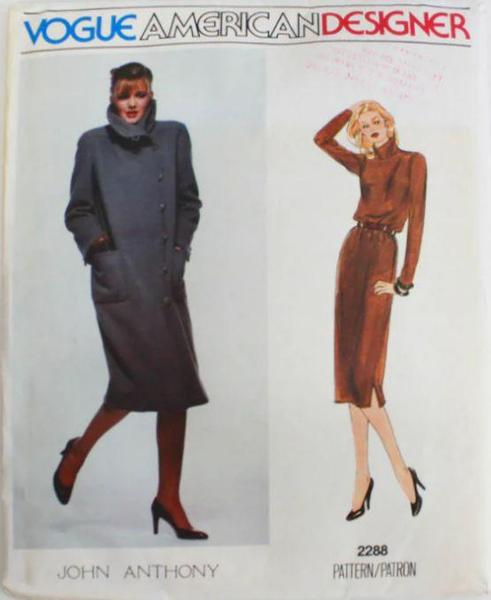
Currently I'm possessed by this coat
I've bought some magnificent red wool. I made this coat when it came out decades ago ,and I loved it. But because I couldn't find any large buttons for it, the coat's proportions really require large buttons, so I put some small buttons on it, and
it's OK, but I never really felt it was a true reflection of the pattern. The main part of the coat that I loved was that collar.
I've been balking at making the coat again because this is a straight coat with little waistline and strong shoulders as the main feature (well, that collar, too). So I'm not sure that when I'm enlarging this at the hips (where I carry most of my weight), if it will destroy the coat line. So I'm toying with adding some waist features to
counterbalance that large hip that I know I will need. It's one of those things that I'm letting it cook. But I have the pattern and the fabric, it's just these proportion details I'm playing with.
But I know that this project will require a breakdown of steps. It's an older lined jacket and probably even has interfacing pieces. I won't cut the pattern, but trace it out, as I will probably do a lot of reworking of the coat's shape. So, counting
all the steps above plus reshaping the body of the coat, this is going to take some time. It's looking like a "snow/sew" day project, where everything stops, and you get a few days of uninterrupted time to work on something like this.
Tips for Your Next Big Project- Gather everything before you start. Having
all your notions, fabric, and tools at the ready saves a lot of frustration.
- Use a timer. Set aside just 20–30 minutes a day. You’ll be amazed at what you can accomplish in small bursts.
- Set aside some time. Don't put any pressure on yourself to finish a large project in one day or a couple of days. Even for small ones, do yourself a favor and allot some time to accomplish your
goals. If anything, allow more time, and when you finish early, move on to the next section.
- Keep a notebook. Jot down any adjustments, ideas, or things you’d do differently next time. It’s a lifesaver for future projects. I also keep a notebook next to me while I sew, because the creative muse always delivers during sewing periods. As a matter of fact, if you are low on ideas or simply can't think of anything to do,
pick up a very simple tee or top that is a piece of cake to sew, and start sewing. Then keep the notebook close, so you can write down those ideas and always consult them later, because you will forget.
If you’re looking for more resources, here's a wonderful interactive chart to plot out the time blocks for making a garment. It may not include everything, but this will give you an idea of how professionals block out the time
to construct a garment. Remember, every complex project is just a collection of little steps. Tackle them one at a time, and you’ll be surprised at
what you can create. Keep sewing, keep learning, and don’t let the big projects scare you off. They’re just waiting to become your next favorite
garment. P.S. If you ever get stuck or need a nudge, browsing the newsletter archive is a great way to find encouragement and new ideas.
Good luck, and push yourself a little to do something a bit more complicated. The satisfaction of accomplishing something more than you thought will be a source of encouragement and delight.
|
Tracking a fashion trend isn't all that hard after seeing a few of them.
Living from Mid-Century Modern through Twiggy...
It's worth the time to look at these styles, particularly today as
there is a group of that wants to look....
This is the way fashion used to be -- pretty, flattering and I can't wait to make some of...
To view in browser along with past emails, click here. We respect your email privacy. |
|
|