Answering QuestionsNovember 14, 2025 Sometimes I get some questions that are very interesting but don't fall into one category or another, but are still worth answering. So this week, I'm going to answer a series of
questions that I have received over the last couple of months.
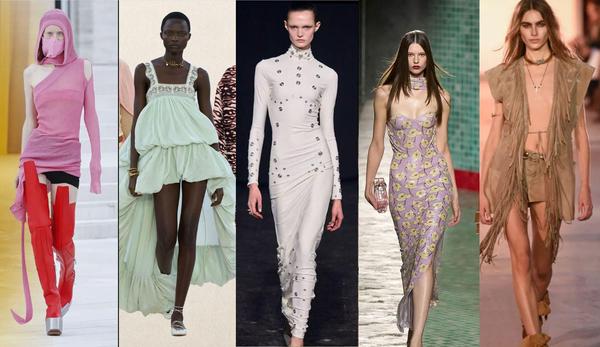
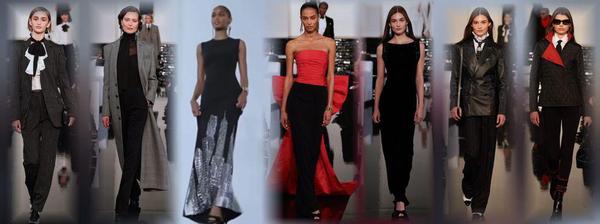
First - Will they ever change sizes on runway shows? These too-thin shapes are not what's really reflected in the real world.
No joke! And Tim Gunn has been a fervent supporter of a variety of shapes on the runway. Not only that, but a designer like me, doesn't get just one size and shape as clients. I gets a myriad of shapes and sizes and
actually rejoice in them cause each one is a new puzzle I get to solve. I have such tremendous fun doing this, that I can't imagine having clients all the same shape and size. How boring would that be.
But not so for major design houses.
The human body has 4 variables - muscles, fat, skin and bone.
Talk about reducing to 2 variables (50% reduction in variables) and that makes it practically stupid easy to make garments for that size - not only
for the runway but for RTW. The egregious theft that goes on in the name of dressing our population with sizes that fit a small percentage of people, is deplorable.
Look at people on the street in 1911
Now look at the people today on the street
For me, there's a real message here, and it's not what you think. We eat more today, but I really believe it's because the food we eat today is filled with chemicals whose names we can't even pronounce.
The main result is that we are fatter
people today than we were in the past. Whether it's our fault or preservatives, who knows? To sit around and think that we, as clothing designers, are designing for a slim body is simply lying to ourselves.
Even if you visit major design houses, the designers all design for figures with two variables. This is not realistic.
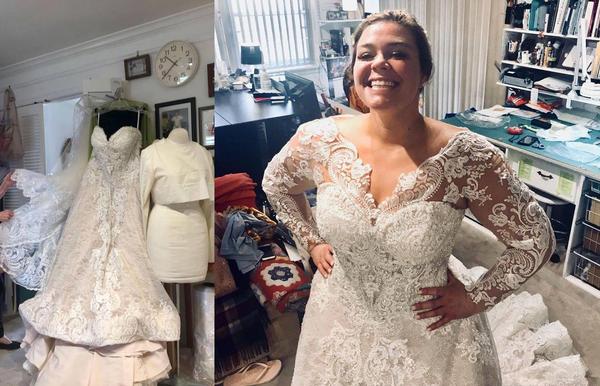
But where I meet my best clients is with those who have four variables in their figures. And usually what ends up happening is
that after I've done the contract for the bride or whoever, the mother, aunt, or grandmother comes to the fittings, then she sees what's going on and wants a gown for her!
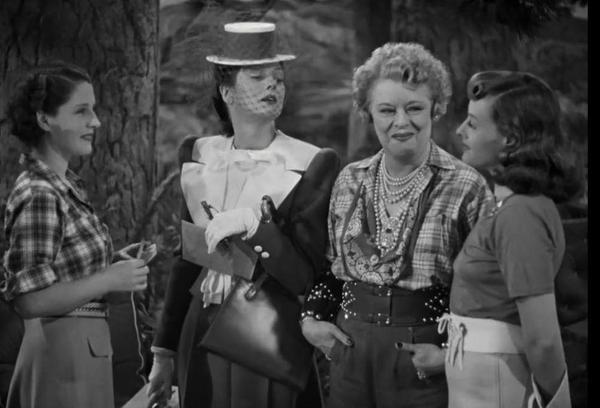
This is the way clothes used to be made for women. Edith Head talks about this in several of her books. Jane Russell had horrendous shoulders, Barbara Stanwick was notoriously LOW-waisted, Rosalind Russell was gigantic tall, and so many more movie stars had figures that no dieting could help, but were purely
genetic.
These women all look like they have perfect figures, thanks to the costume designer. But starting on the left Norma Shearer is short and has a very short waist, Rosalind Russell was gigantic tall and straight up and down, Mary Boland, was older here and not
meant to have a good figure which is good cause she was thick through the waist, tummy and not in the chest, the furthest on the right is Paulette Goddard, no bust and thick waist. And yet they were all revered as being outstanding examples of beauty and what many women thought were gorgeous.
What's different about today is that the bodies are not only thin, but almost purposely thin where they shouldn't be or don't need to be.
It may be normal to have thin calves (maybe), but when you see the hollow between the thighs, that isn't normal; these models today are made to feel that this should be normal.
I have never liked this sort of game that famous designers play with the
buying public. Of course, these designers believe that they don't have to style their clothes for these "out of shape" figures. I have to wonder, though, because it's the older woman who has the money to pay for these dresses that the younger, waif-ish women can't buy.
You can tell I'm very cynical about this because I've had clients who've been told by the store that they don't make anything in their size, and they're at a loss about what to do. They come to me,
and I treat them like they are normal human beings and ask them what they are most sensitive about, and then we design away!
All these ladies didn't have skin-bone figures, and I had a blast making their special gowns. I think working with difficult figures is more fun than the skinny figures because I do make them look very pretty for their day, and they feel the most special
for that day, and that's what it's all about.
Second:
Was in reference to a Zoom class I did a number of years ago, about adding in the hip, especially for we pear ladies who actually have abnormally small waists, but then that makes our hips look extra
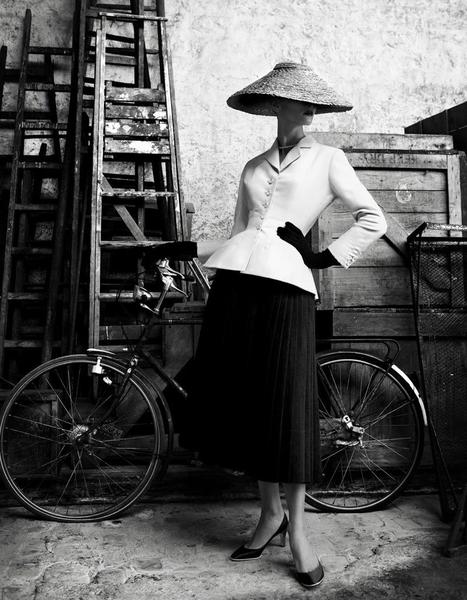
large. This is actually what Dior did to accentuate the shape of the female body. After WWII, when fashion was so austere and used the minimal amount, he wanted to exaggerate the female shape - the hourglass, by making the waist extra small, which would make the hips look extra big, therefore voluptuous (which was the world of the day for beauty!) The war was won, and soldiers were coming home and time to get married, have a family and live the good life. For
whatever else was wrong or haywire, the most important thing was to enjoy good times after the horrible war.
The suit actually had padding in the hips of the jacket to make sure that the waist would look extra small and the hips were extra large.
For us when we get ready to add to our hip, we are more interested in a good fit,
not necessarily making our waist look smaller or our hips look larger - we usually are aware they are already large enough!
The first thing is where we need to add in the hip area.
One Hip Higher Than The Other
Often there can be more on one side than another. This happens when the hip is a little higher on one side. That side (where the hip is a little higher) needs a little more fabric. But be careful here, cause if the pants or skirt are gathered,
you can add a little more, but not too much more, otherwise it will exaggerate that higher hip.
The Cure
The cure is fairly easy. In a gathered waistband, simply allow more ease on that one side so that there's no pulling. Pulling can instantly accentuate that area.
If there are darts, then you will need an extra dart on the high hip side to fit that higher hip. You will have to make another dart in equal
length on the other side, but on this one you barely take up any fabric. The reason you do this, is that we are after the illusion of balance. No fabric will be taken up on the lower hip side, just the thin dart. This makes it look like both hips are the same size.
NOTE: Having one hip higher than the other is a distinctive feature of the human body. There is not one person, no matter how thin, who doesn't have this feature. To fit it and make
it look more balanced will make your garments have that extra couture look. Because believe me no one will know but you.
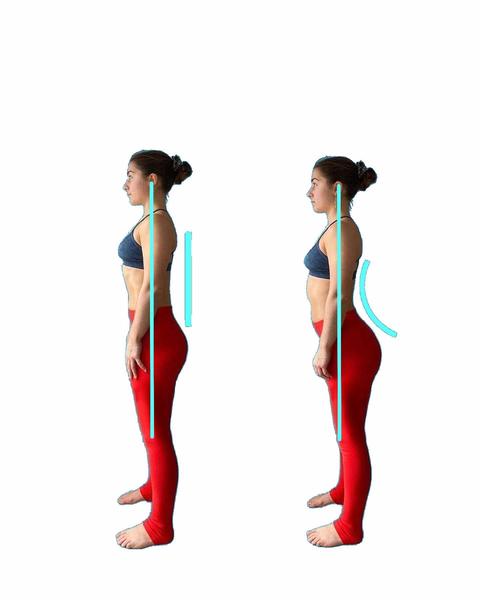
This is an interesting shape where the back side is more pronounced than the front side. So when you take the measurement and look at the hip girth, it may be the same as the person without a sway back. However the difference is that because of the
sway, there is more in back and less in front. That means that we have to make it roomier in back and less fabric in front. At the same time we have to keep the drape
So here shows the fitting problem and how we're going to reason through the solution.
This is the classic Sway Back - you can see on the left what the straight back looks like and on the right, where the pelvis is tilted back at the bottom and same at the waist. You can also see that the model above hasn't gained a single inch around
the hip - only the position of the hip has changed. This is important because measurements don't work on this particular fitting situation. And this is why. The pelvis is in a different position, but no change has been made in the girth measurement.
What's happened is that the pelvis is in a different position - it's tilted and we have to fit that tilt to make this look balanced. That may sound complicated but it's not. Here's how to think through
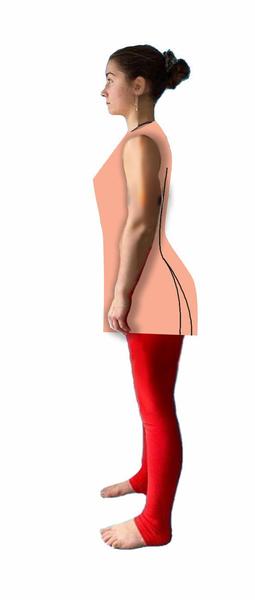
this....The pelvis at top is good - it's at the waist, but the pelvis at bottom is tilted toward the back. So that means we have to add fabric only at the back and not at the front. As a matter of fact we will take away a little from the front.
So here is what a sway back looks like when we're finished. I drew in the seam lines because what I did is I added a godet (go-day - it's French!). And that added the fabric right where I wanted it.
In the sway back, you must add where
you need the fabric - not more fabric. So adding a godet in the back (actually I add two), provides extra space in the back where I need it.
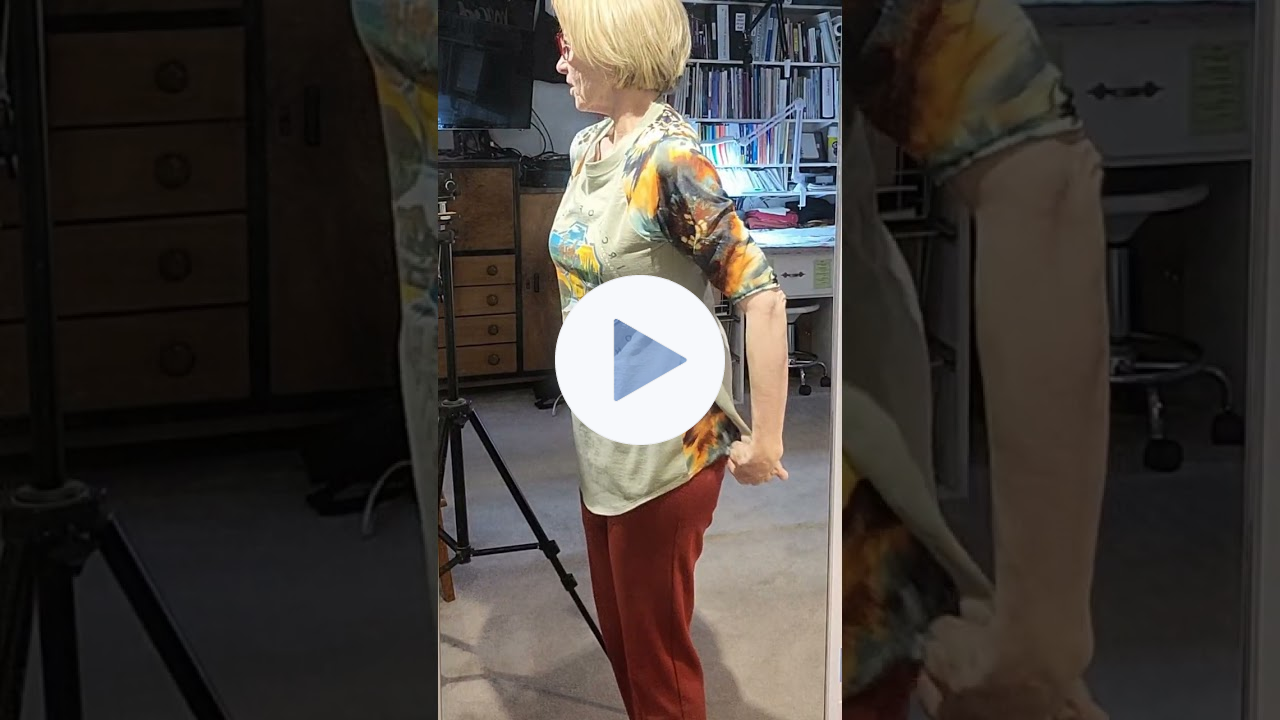
Here's a video to make my point. This is strictly for sway backs. You must add extra in the back, and you can see why in this video. In this particular instance, I already had side godets in the side seams, so I didn't want to get carried away
with godets here and there, so I put only one in the back, but wow! The difference is impressive.
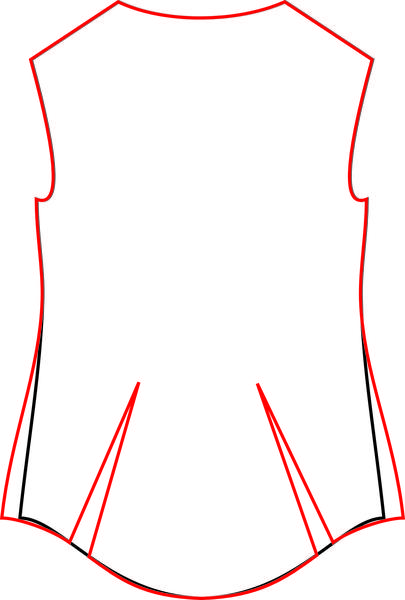
Here is my favorite way to add godets in the back. The black is the original and the red is the one with godets which means it flares just a little but enough to rest and fall and hang correctly! You don't need huge godets here. Most of
the time my godets at the bottom are about 1.5" to 2" total (per godet - at the bottom).
Now a word of warning here. If you have a huge differential between your waist and your hips, and you have as much fullness in your stomach, and upper hips and fanny, in other words, all the way around, this
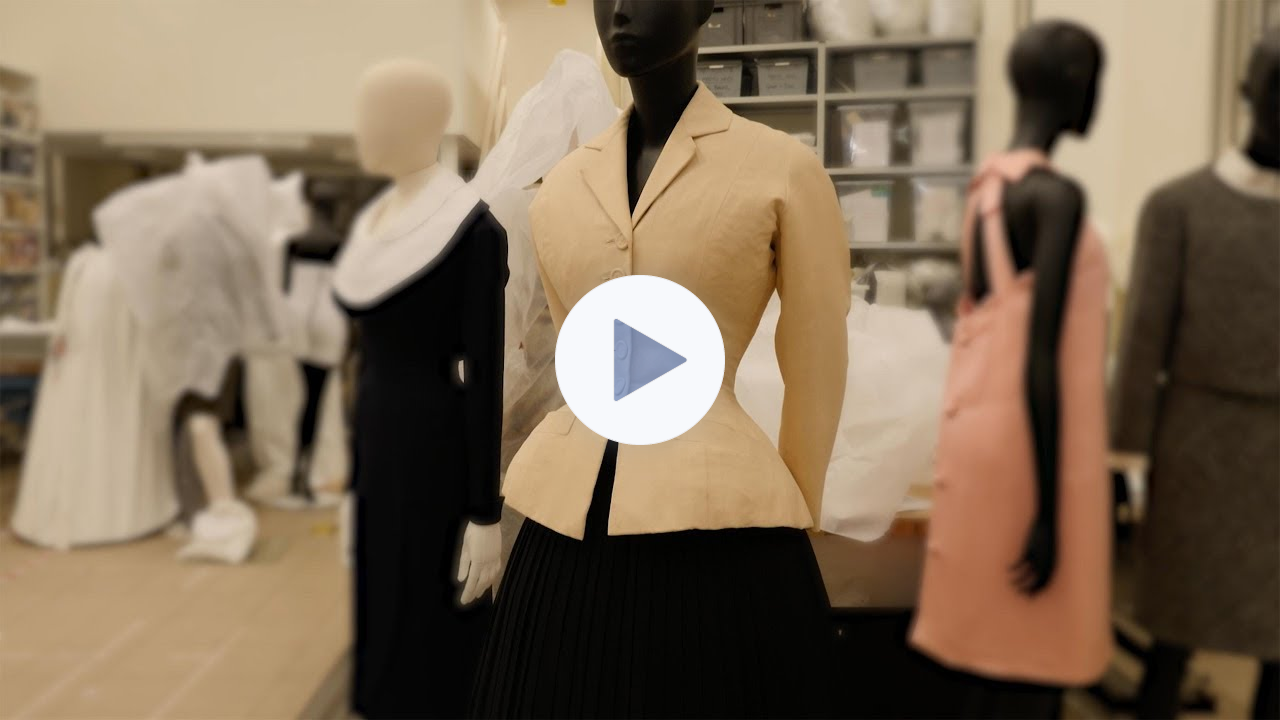
sway back alteration won't work for you. That's a different alteration. This is the model that the Bar Suit for Dior was made. To show you how a designer solves this problem of a huge differential between the waist and the hips/stomach/fanny, here is a lovely video from the V & A Museum in London and it's an excellent example of the panels (there were ten panels in all because it took that many to make the wide part at the hem. Remember the suit jacket had padding in
the hips to make the hips even larger.
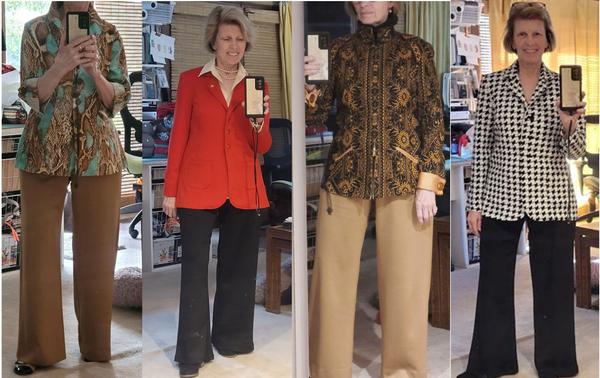
If you are working on a top that has to have that much differentiation from the waist to the hips, I would be very much tempted to make the waist a little larger. You'll notice I wear a lot of clothes that aren't on my waist. I do that because if I
did, it would make my hips look even larger. So I would add a bit to the fabric in my waist, and I would also make my waist appear higher by making the smallest part a little above my waist.
All of these show a waist, but none of them fit exactly on my waist. They hint at a waist, but not my real waist. If I did fit exactly on my waist, it wouldn't be good balance for my hips.
If you have any questions, please feel free to send them our way. I love
hearing from you, and in particular, the problems that you are having. No, I'm not a psychotic masochist. I really do find challenge and fun in solving puzzles, such as fitting problems.
The SewingArtistry Resource Library is designed to contain information to not only make your sewing better, but to aid in you fitting and flattering your shape, size and style. Check it out.
I'm taking a break from teaching right now, but I am able to do Zoom demos or talks for your sewing group. Contact me for details.
|
This is a sad day - the loss of a classic tradition. Armani held the line
to fashion style that ...
Tracking a fashion trend isn't all that hard after seeing a few of them.
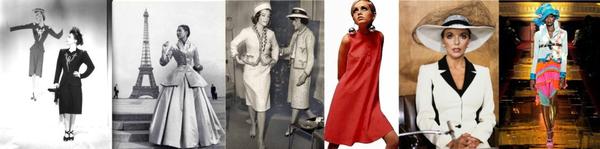
Living from Mid-Century Modern through Twiggy...
It's worth the time to look at these styles, particularly today as
there is a group of that wants to look....
This is the way fashion used to be -- pretty, flattering and I can't wait to make some of...
NOTE: There are some folks who can't get my email, or it's sporadic, or something is hinky. I will always respond to any of you who send a private message, whether it's about the topic of the week or something else. If you don't get anything
from me, it's probably because the [email protected] email is blocked, and even a private message can't get through. In that case, I'm on Instagram often, and you can always PM me at @sewingartistry.
As a precaution,
please ensure I'm in your email Address Book and check your spam, junk, and trash folders. Some email clients get extra excited when they see emails coming into the Inbox that go to many other receivers. They automatically think it's trash or spam, and it never makes it to the Inbox. I must constantly check my spam and junk folders to ensure I'm getting the emails I subscribe to.
To view in browser along with past emails, click here. We respect your email privacy. |
Tracking a fashion trend isn't all that hard after seeing a few of them.
Living from Mid-Century Modern through Twiggy...
It's worth the time to look at these styles, particularly today as
there is a group of that wants to look....
This is the way fashion used to be -- pretty, flattering and I can't wait to make some of...
NOTE: There are some folks who can't get my email, or it's sporadic, or something is hinky. I will always respond to any of you who send a private message, whether it's about the topic of the week or something else. If you don't get anything
from me, it's probably because the [email protected] email is blocked, and even a private message can't get through. In that case, I'm on Instagram often, and you can always PM me at @sewingartistry.
As a precaution,
please ensure I'm in your email Address Book and check your spam, junk, and trash folders. Some email clients get extra excited when they see emails coming into the Inbox that go to many other receivers. They automatically think it's trash or spam, and it never makes it to the Inbox. I must constantly check my spam and junk folders to ensure I'm getting the emails I subscribe to.
To view in browser along with past emails, click here. We respect your email privacy. |
|
|

![New York 1911 (New Version) in Color [60fps, Remastered] w/sound design added](https://hostedimages-cdn.aweber-static.com/NjYwNTQ5/original/94a97373e3844b559c1b283d6ba8555e.png)